Warm-ups don’t have to be lines, laps, and complaints. The best kids’ warm-ups feel like games — but they still build the foundations you want: movement quality, coordination, listening, confidence, and teamwork.
This list is universal, designed for mixed ages, and written for both parents and activity providers.
At a glance
- 12 warm-ups you can run with a whole group
- Each one includes: set-up, how to play, coaching cues, easy/harder options, and SEND-friendly tweaks
- Most take 2–4 minutes each
How to run these
- Pick 3 warm-ups (8–12 minutes total)
- Start with a big mover (heart rate)
- Then a brain + body game (listening/reaction)
- Finish with a ball/object option (if relevant) or a teamwork game
1) Traffic Lights
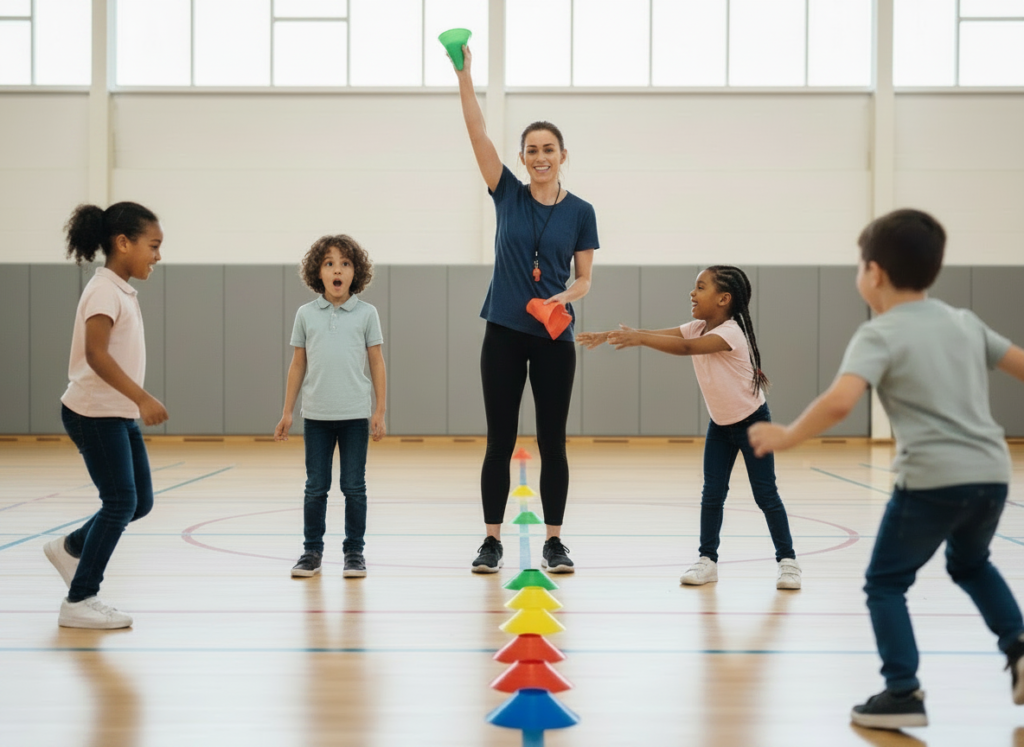
Builds: stop/start control, listening, acceleration
Set-up: cones to mark a space.
How to play:
- Green = move (run, skip, side-step)
- Amber = slow motion
- Red = freeze
Coaching cues: “Eyes up.” “Small fast steps.” “Freeze like a statue.”
Easier: only green/red. Let kids copy your movement.
Harder: add Blue = backpedal, Purple = jump-turn, White = crawl.
SEND-friendly tweaks: show coloured cards; pre-teach each colour; allow a “pause spot” at the edge.
2) Mirror Me

Builds: coordination, focus, confidence, leadership
Set-up: pairs, facing each other.
How to play: one child leads slow movements (reach, twist, knee lifts) while the other mirrors. Swap.
Coaching cues: “Slow is strong.” “Match the speed.” “Copy the shape.”
Easier: leader uses only 3 moves.
Harder: add levels (low/middle/high), or mirror while side-stepping.
SEND-friendly tweaks: offer a visual move card list; allow parallel mirroring (side-by-side) instead of face-to-face.
3) Coach Says (Sporty Simon Says)
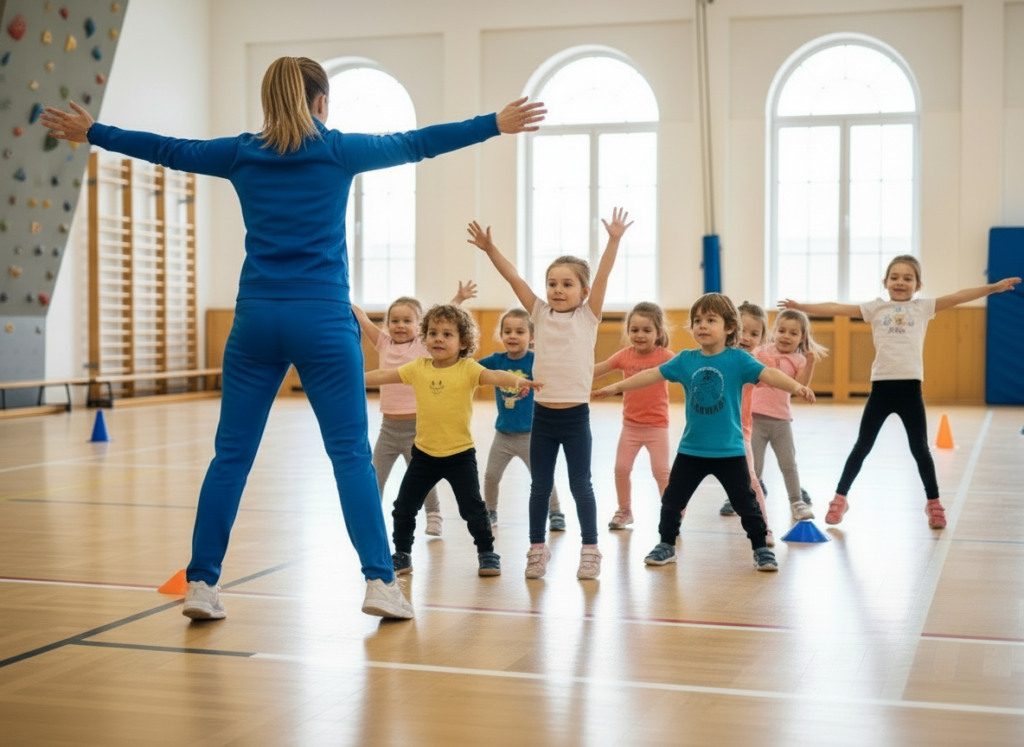
Builds: listening, inhibition control, body awareness
Set-up: group in a space.
How to play: only do the action if it starts with “Coach says…”.
Action ideas: toe taps, star jumps, balance on one leg, side shuffle, reach high/low.
Coaching cues: “Wait for the words.” “Reset to ready position.”
Easier: slow pace; fewer trick rounds.
Harder: speed up; add two-step commands (“Coach says jump then freeze”).
SEND-friendly tweaks: keep language consistent; demonstrate each action once; allow a buddy to model.
4) Animal Moves Relay (No Winners)
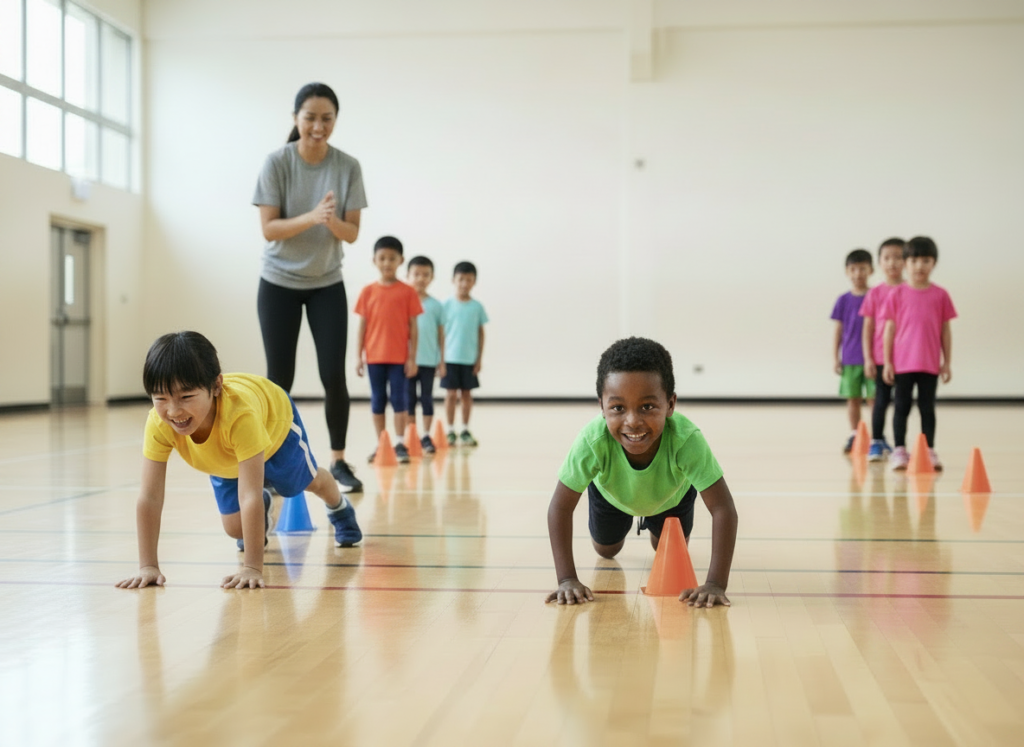
Builds: strength, mobility, fun effort
Set-up: two lines, short distance.
How to play: kids travel down and back as an animal. Everyone goes; no scoring.
Animals: bear crawl, crab walk, frog jumps, cheetah sprints, penguin waddles.
Coaching cues: “Quiet hands/feet.” “Strong tummy.” “Small jumps, soft landings.”
Easier: shorter distance; choose only 2 animals.
Harder: mix animals mid-way (“Cheetah to cone 1, penguin to cone 2”).
SEND-friendly tweaks: offer choice of 2 animals; allow walking version; avoid crawling if sensory-aversive.
5) Freeze Dance Fitness
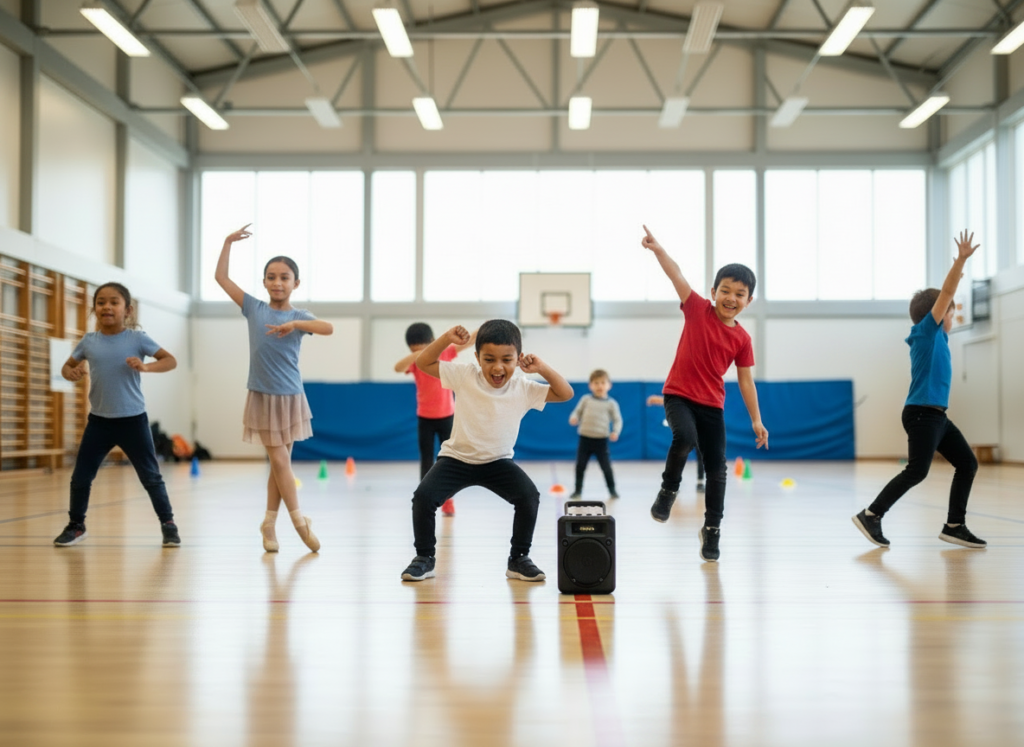
Builds: rhythm, stop/start control, joy
Set-up: music optional.
How to play: move any way you like; when you call “Freeze!” everyone holds a shape.
Shape prompts: “Tall.” “Tiny.” “Wide.” “One foot.” “Superhero.”
Coaching cues: “Freeze fast.” “Hold steady.”
Easier: longer movement time; predictable freezes.
Harder: freeze into a specific skill shape (ready stance, side-on, arms out for balance).
SEND-friendly tweaks: give a countdown (“3–2–1 freeze”); allow a calm corner; reduce volume.
6) Numbers Game (Group Reaction)
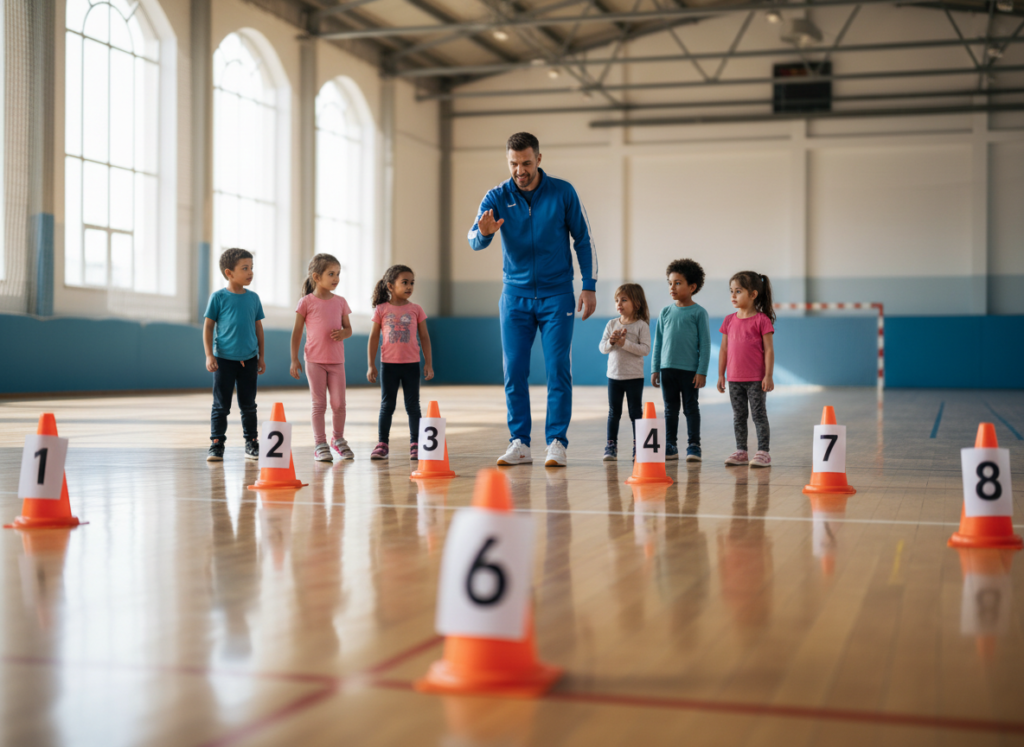
Builds: scanning, teamwork, quick decisions
Set-up: place 6–10 cones (or spots) around the area, numbered.
How to play: kids jog around; you call a number; they move to that cone and hold a ready stance.
Coaching cues: “Find it with your eyes first.” “Don’t crash — share space.”
Easier: fewer cones; walk instead of jog.
Harder: call two numbers in sequence; add “buddy up at cone 4”.
SEND-friendly tweaks: use big visible numbers/colours; keep the same cone layout each session.
7) Shadow Tag (No Contact)
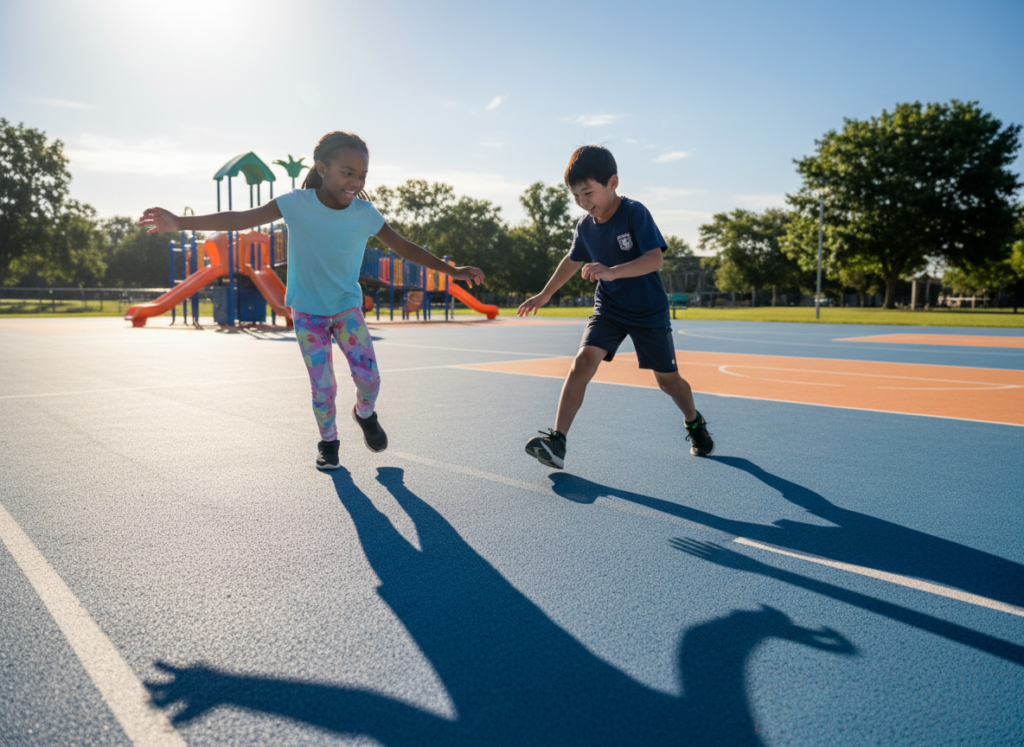
Builds: agility, awareness, speed changes
Set-up: pairs.
How to play: one child is the runner; the other tries to step on their shadow (or stay within 1 metre). Swap.
Coaching cues: “Change direction.” “Small quick feet.” “Eyes up.”
Easier: walking pace.
Harder: runner must use only side-steps/backpedal.
SEND-friendly tweaks: define clear boundaries; offer a “follow the leader” version if tag feels stressful.
8) Gate Run
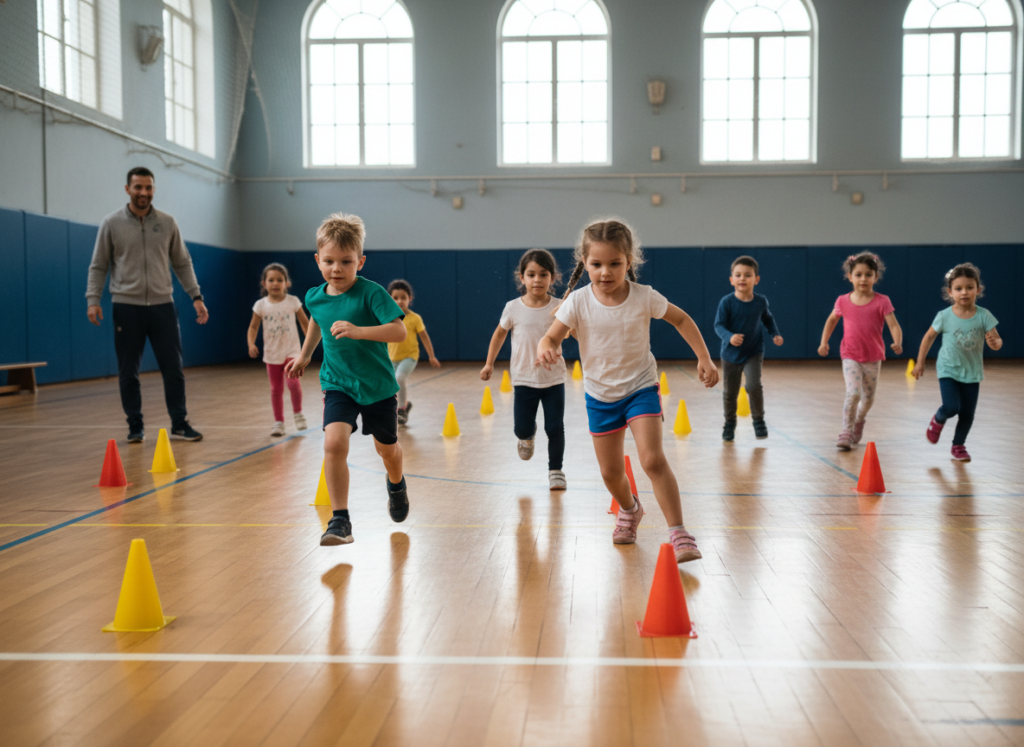
Builds: acceleration, deceleration, turning
Set-up: scatter pairs of cones as “gates”.
How to play: kids move through as many gates as possible in 30 seconds.
Coaching cues: “Turn tight.” “Soft knees.” “Look for the next gate.”
Easier: walk/skip; longer time.
Harder: only certain gates count (call a colour), or add “two feet in each gate”.
SEND-friendly tweaks: give a personal target (“find 5 gates”); allow a buddy route.
9) Follow the Path
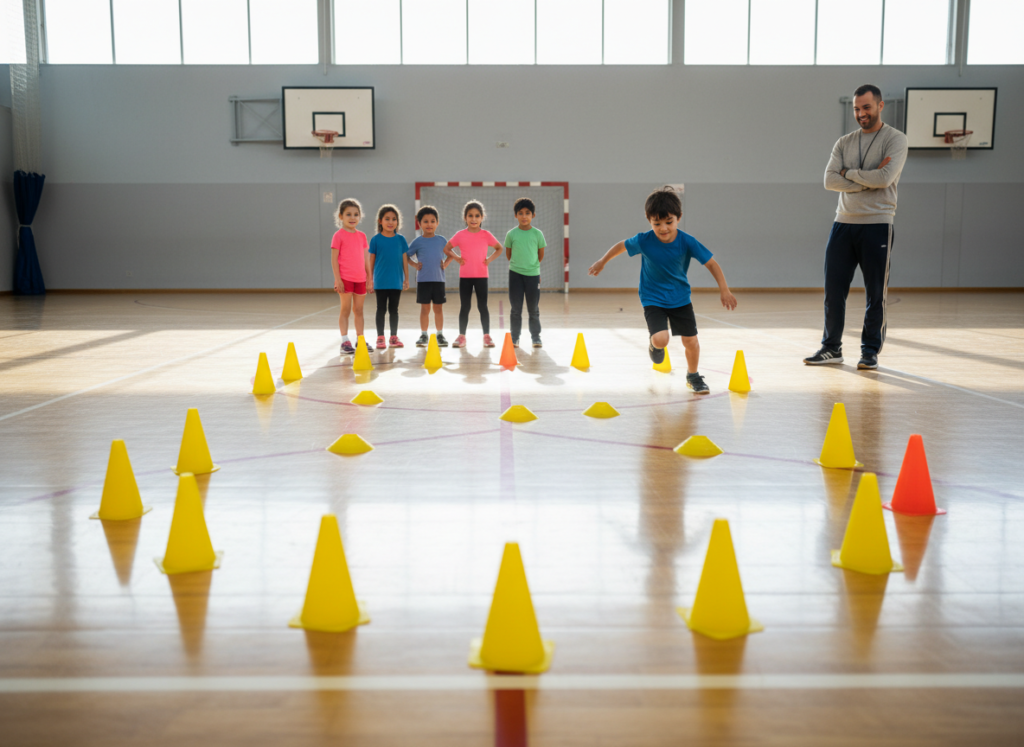
Builds: footwork patterns, coordination
Set-up: lay out a simple cone path (zig-zag, circle, figure-8).
How to play: kids travel the path using a chosen movement (side shuffle, high knees, tip-toes).
Coaching cues: “Stay on the path.” “Control first, speed second.”
Easier: wider turns; walking.
Harder: add a reaction call mid-way (“switch to backpedal”).
SEND-friendly tweaks: keep the same path weekly; use floor markers/tape for clarity.
10) Partner Pass & Move (No Equipment Version Included)
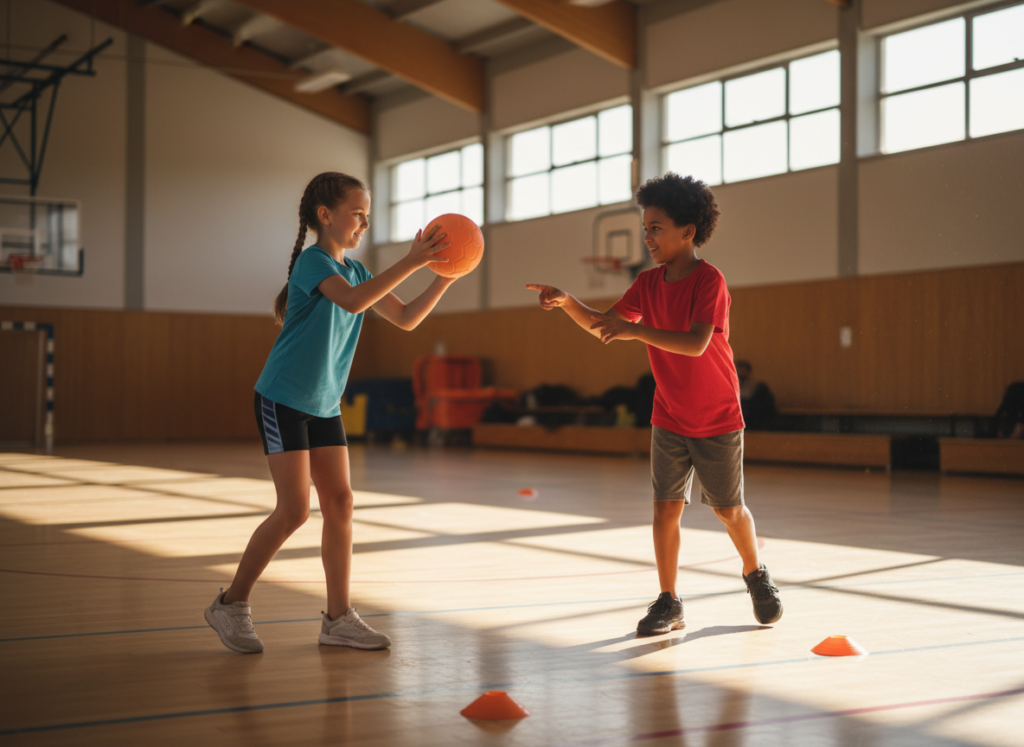
Builds: communication, timing, moving into space
Set-up: pairs.
How to play (with object): gentle pass, then both take two steps to a new spot. Repeat.
No equipment version: one partner points to a spot; both move there together and freeze in ready stance.
Coaching cues: “Show hands.” “Call a name.” “Move after you pass.”
Easier: bigger/softer ball; shorter distance.
Harder: one-touch passes; add a defender cone to move around.
SEND-friendly tweaks: allow rolling instead of throwing; use predictable scripts (“Ready?” “Yes.” “Go.”).
11) Team Shape Shuffle
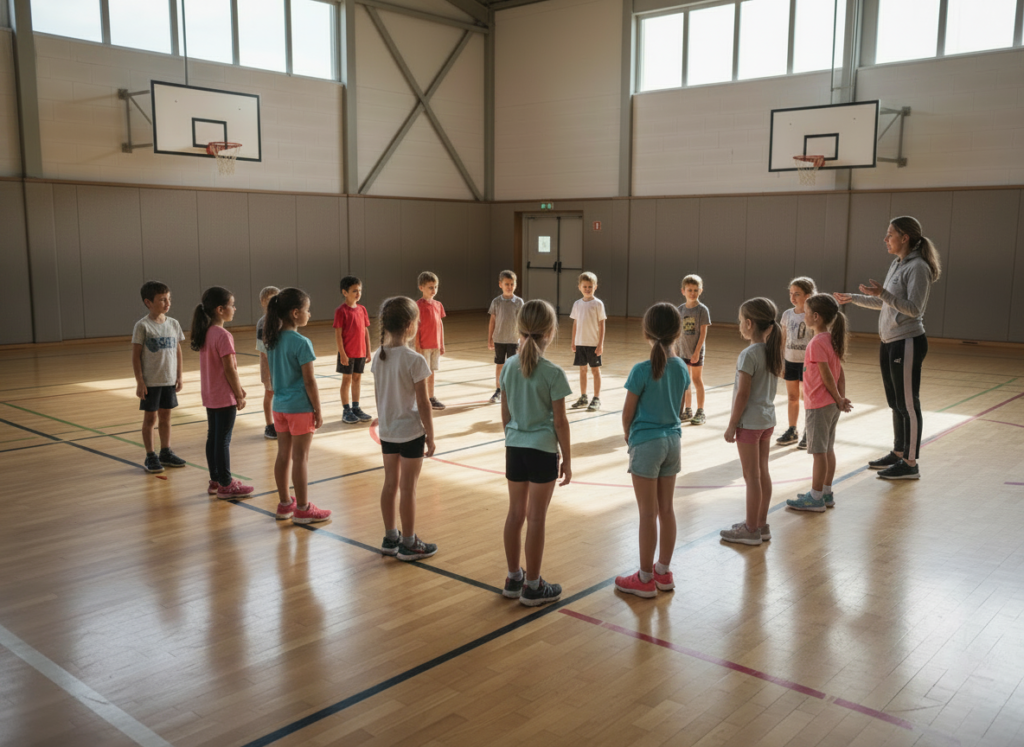
Builds: teamwork, spatial awareness, calm communication
Set-up: group in a space.
How to play: you call a shape; the group makes it together.
Shapes: line, circle, triangle, letter T, “two small circles”.
Coaching cues: “Talk kindly.” “Make space.” “Check who needs help.”
Easier: only line/circle.
Harder: time challenge (“Can you do it in 10 seconds?”) then repeat to beat your own time.
SEND-friendly tweaks: show a picture of the shape; assign roles (“you’re a corner”); allow observing first.
12) Ready Stance Challenge
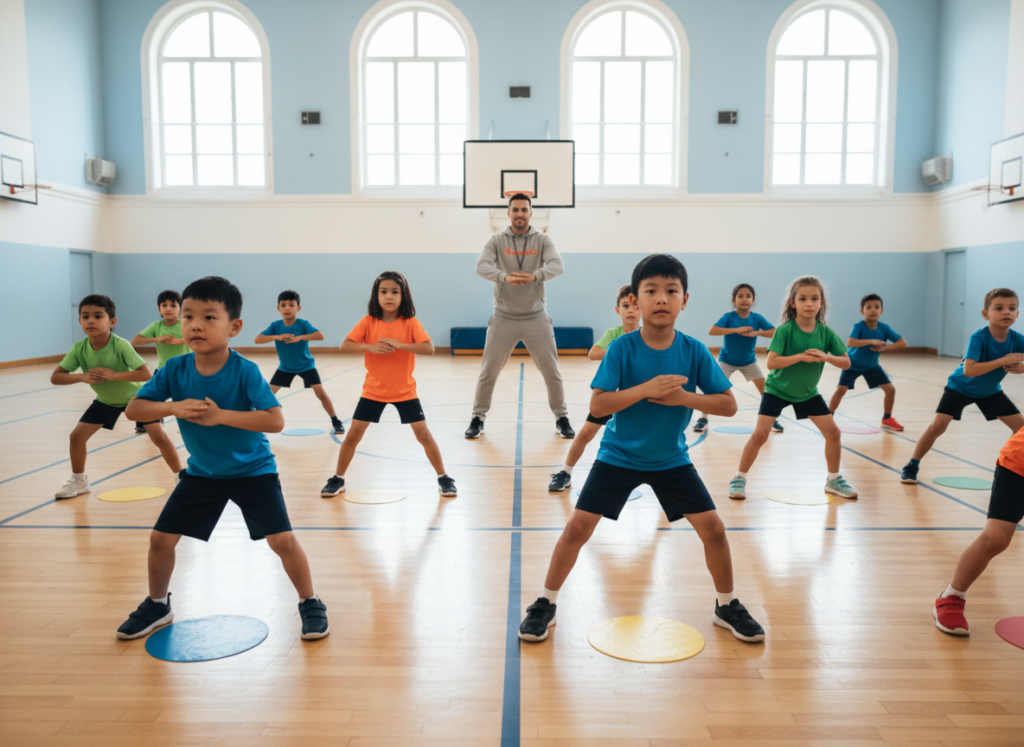
Builds: athletic position, balance, confidence
Set-up: everyone spaced out.
How to play: kids move freely; on your call, they snap into “ready stance” (soft knees, eyes up). Hold for 3 seconds.
Add-ons: point left/right, jump-turn then ready, one-foot balance then ready.
Coaching cues: “Soft knees.” “Strong tummy.” “Eyes up.”
Easier: slower pace; practise stance first.
Harder: add a reaction (call a number and they move that many steps then ready).
SEND-friendly tweaks: demonstrate; use the same cue words every time; allow a personal space marker.
Wrap-up: make warm-ups the best part
If warm-ups feel like games, kids buy in faster, settle into the session, and build skills without the pressure. Pick three, keep it short, and repeat favourites often — familiarity is what turns I don’t want to into Can we do that one again?.