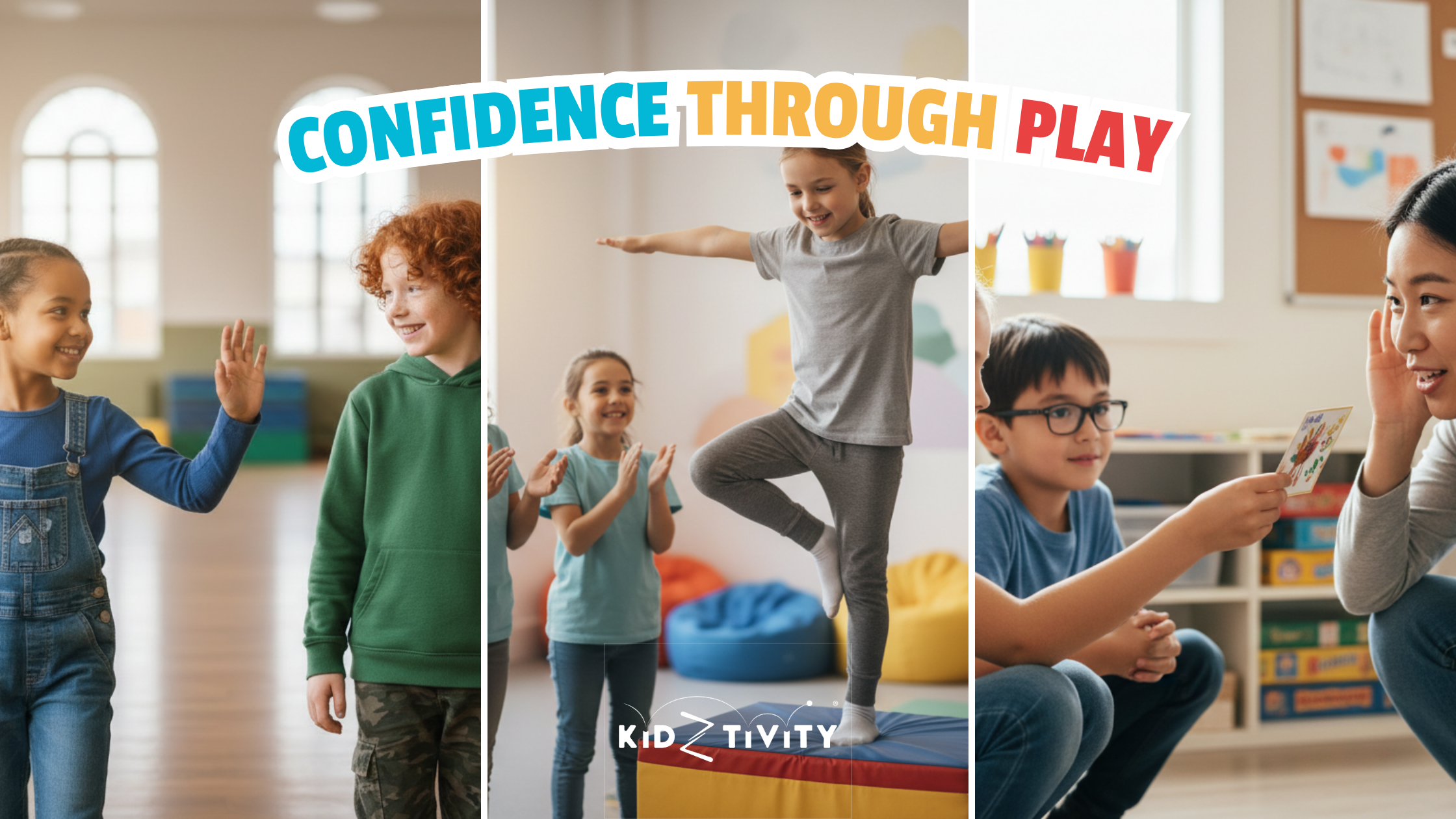
Confidence isn’t a personality trait some children are born with and others aren’t. It’s a learned feeling that grows when children experience: I tried → I coped → I improved → I can try again.
Play is the perfect confidence gym because it’s low-stakes, repeatable, and full of tiny moments of success. Whether you’re a parent at home or an activity professional in a club setting, the goal is the same: create “just-right” challenges that feel doable and a little bit stretchy.

The confidence rule: “Just-right challenge”
A just-right challenge sits between:
- Too easy (boring, no growth)
- Too hard (overwhelm, shutdown)
Aim for: “I’m not sure… but I’ll have a go.”
The 3-step confidence loop
- Set it up to succeed (clear goal, short time limit, simple kit)
- Coach the effort (helpful language, calm tone)
- Celebrate the process (what they did, not what they are)
What to say (confidence-building scripts)
Use language that makes bravery feel normal:
- “Let’s try a practice go.”
- “You don’t have to get it perfect — just have a go.”
- “Show me your best try.”
- “That was tricky, and you stayed with it.”
- “What’s one tiny tweak for the next go?”
Avoid labels that add pressure:
- “You’re a natural!” (can make kids fear losing the label)
- “That was easy for you.” (can shut down effort)
10 micro-challenges (2–10 minutes each)
Each one is designed to create quick wins, repeat attempts, and visible progress.
1) The “One More” Jump

You’ll need: tape line or cushion
How to play:
- “Jump over the river.”
- “Now try one more jump — same spot.”
Make it easier: step over, hold hands.
Make it harder: two lines, longer “river,” jump + stick the landing.
SEND-friendly tweak: offer a choice: jump, step, or hop. Same goal, different route.
2) Sock Target Toss (3 tries)

You’ll need: 3 sock balls, basket/box
How to play:
- “You get three throws. After each one, we do a tiny tweak.”
- “What will you change — aim, power, or position?”
Make it easier: move closer, bigger target.
Make it harder: smaller target, further line, weak-hand.
3) Balance Line “Freeze”

You’ll need: tape line
How to play:
- “Walk the line.”
- “At the end, freeze like a statue for 3 seconds.”
Make it easier: wider line, shorter distance.
Make it harder: carry a soft toy, walk backwards.
4) The Brave Ask (Redo)

What it builds: speaking up, asking for help, joining in — without forcing a big social leap.
Set-up: Choose one “brave ask” to practise. Keep it tiny and specific.
Brave asks to choose from:
- “Can you help me please?”
- “Can I have a turn next?”
- “Can I join in?”
- “I need a break.”
- “Can you show me again?”
How to play (what to say):
- “We’re doing a practice ask. You can try it in a whisper, a quiet voice, or a brave voice — you choose.”
- “I’ll answer kindly every time. Ready for your practice go?”
- “Nice. Let’s do it again and make it one notch clearer.”
Make it easier: point + gesture, choose from two options, adult models first (“Watch me, then you”).
Make it harder: add eye contact for 1 second, ask in a busier space, or do it after a small disappointment (“I didn’t get a turn — can I go next?”).
5) Timer Tidy Sprint (60 seconds)

You’ll need: timer, 10 items
How to play:
- “How many can you put away in 60 seconds?”
- “Next round: can you beat your own score by 1?”
Make it easier: fewer items, longer time.
Make it harder: sort by colour/type.
6) Copy-Me Moves (leader swap)

How to play:
- Adult/leader does 3 moves, child copies.
- Swap: “Now you lead. I’ll copy you.”
Confidence win: being the leader.
Make it easier: 1 move at a time.
Make it harder: 5-move sequence.
7) “Not Yet” Puzzle Piece

You’ll need: simple puzzle / Lego model / drawing
How to play:
- “Pick one tiny part to finish.”
- “If it’s tricky, we say ‘not yet’ — then try again.”
Make it easier: bigger pieces, shorter task.
Make it harder: timed “focus burst” (3 minutes).
8) The Friendly Hello

How to play:
- “Practice a hello: ‘Hi, do you want to play?’”
- Role-play first, then try it for real.
Make it easier: wave + smile.
Make it harder: ask a question: “What game do you like?”
9) The “Try a New Way” Challenge
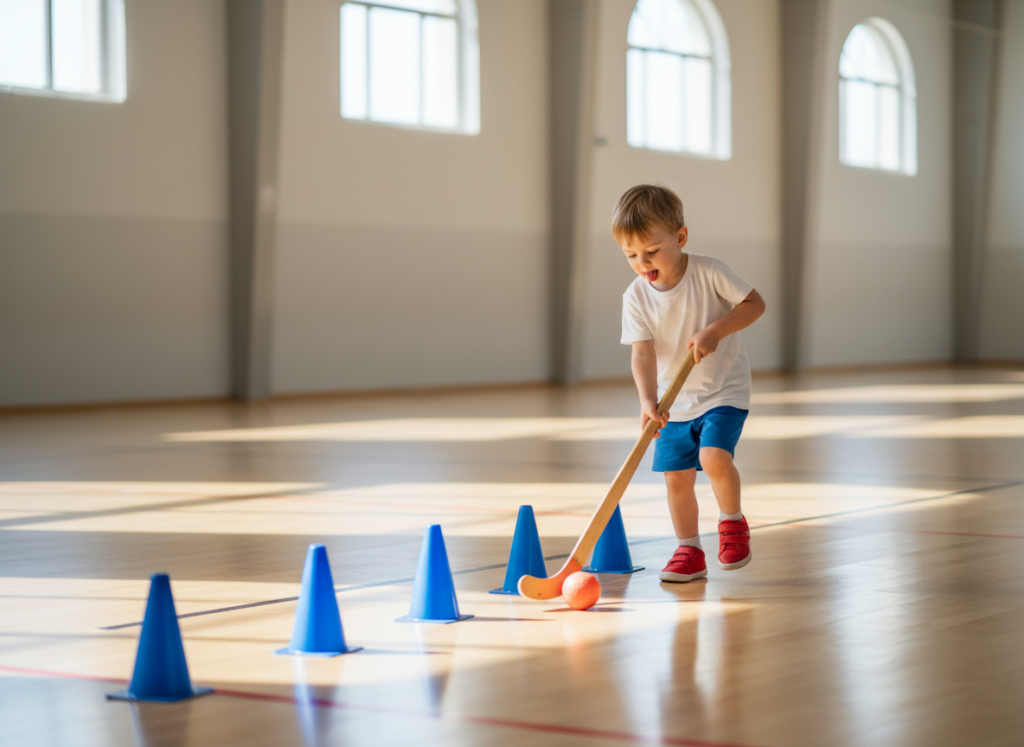
You’ll need: any familiar game
How to play:
- “Do it your normal way.”
- “Now try a new way: slower / faster / different hand / different route.”
Confidence win: flexibility and coping with change.
10) The Mini Showcase (safe spotlight)

How to play:
- “Show us one thing you’re proud of — a move, a jump, a throw.”
- Audience script: “We clap for effort.”
Make it easier: show to one trusted person.
Make it harder: teach it to the group.
For activity providers: how to run this as a 20–30 minute block
- 2 mins: warm welcome + “brave tries” rule
- 18 mins: 6 micro-challenges (3 mins each)
- 5 mins: mini showcase + effort praise
- 2 mins: calm reset (water + breathing)
When a child refuses (what to do)
Refusal is often fear of failing.
Try:
- “Let’s do a practice go together.”
- “Do you want the easy version or the tricky version?”
- “You can watch first, then join when you’re ready.”
Conclusion
Confidence grows in tiny moments, not big speeches. If you can help a child take one small risk, feel supported, and notice their own progress, you’re building the belief that matters most: I can cope with hard things.
If you want, I can turn these into printable station cards (materials, set-up, coach script, adaptations, and safety notes) for home or club delivery.