Ever planned a brilliant activity, set everything up… and got hit with: “No.” Or the classic: “That’s boring.”
It’s rarely because the activity is bad. It’s because new can feel risky for children. New rules, new skills, new expectations — and the fear of getting it wrong — can trigger an instant shutdown.
This starter pack is for parents and children’s activity providers. It keeps things low-pressure, predictable, and confidence-building so kids are far more likely to give something a go.
Why kids reject new activities (the real reasons)
Most “I don’t want to” moments come from one of these:
- Uncertainty: “What am I meant to do?”
- Fear of failing: “What if I’m not good?”
- Loss of control: “I didn’t choose this.”
- Sensory overload: noise, mess, textures, too many people watching.
- Transition friction: stopping something familiar to start something unknown.
So the goal is simple: make the first attempt feel like “I know what’s happening. I can do a small bit. I’m safe.”
The Starter Pack (use these in order)
1) The 10-second preview
Before you launch in, give a tiny, clear picture.
- “We’re going to play a quick game called ___.”
- “You only need to do one thing: ___.”
- “We’ll try it for 3 minutes, then we can choose what’s next.”
Keep it short. The more you explain, the bigger it can feel.
2) The “practice go” (no pressure)
Make the first attempt a rehearsal, not a test.
What to say:
- “Let’s do a practice go. This one doesn’t count.”
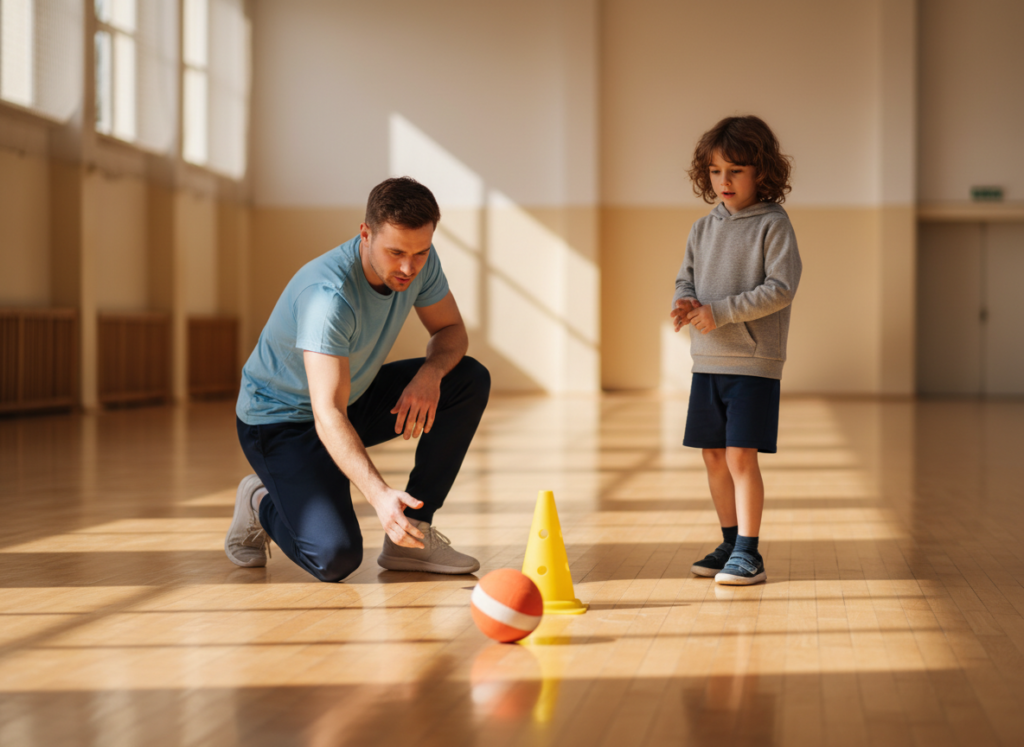
- “I’ll show you once, then you copy.”
- “We’re just exploring.”
3) The 2-choice entry (control without chaos)
Give two options that both lead into the activity.
- “Do you want to start with the easy version or the tricky version?”
- “Do you want to go first or watch one go first?”
- “Do you want to do it with me or on your own?”
This protects autonomy while keeping the boundary.
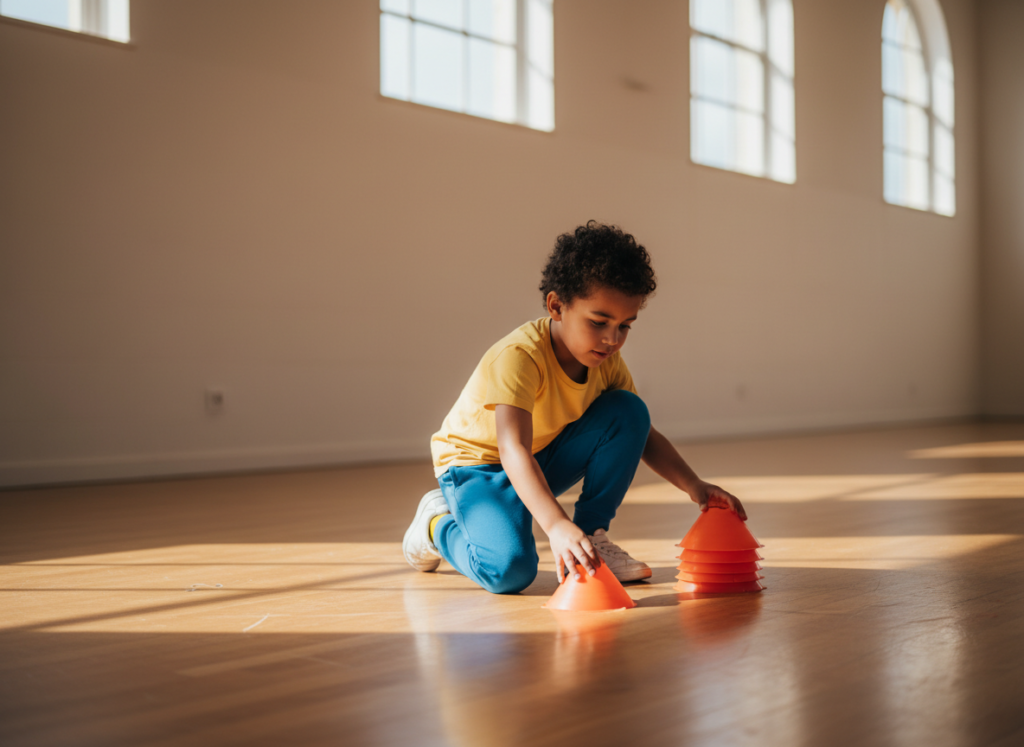
4) The “one tiny job” (instant buy-in)
If children help set up, they’re more likely to try.
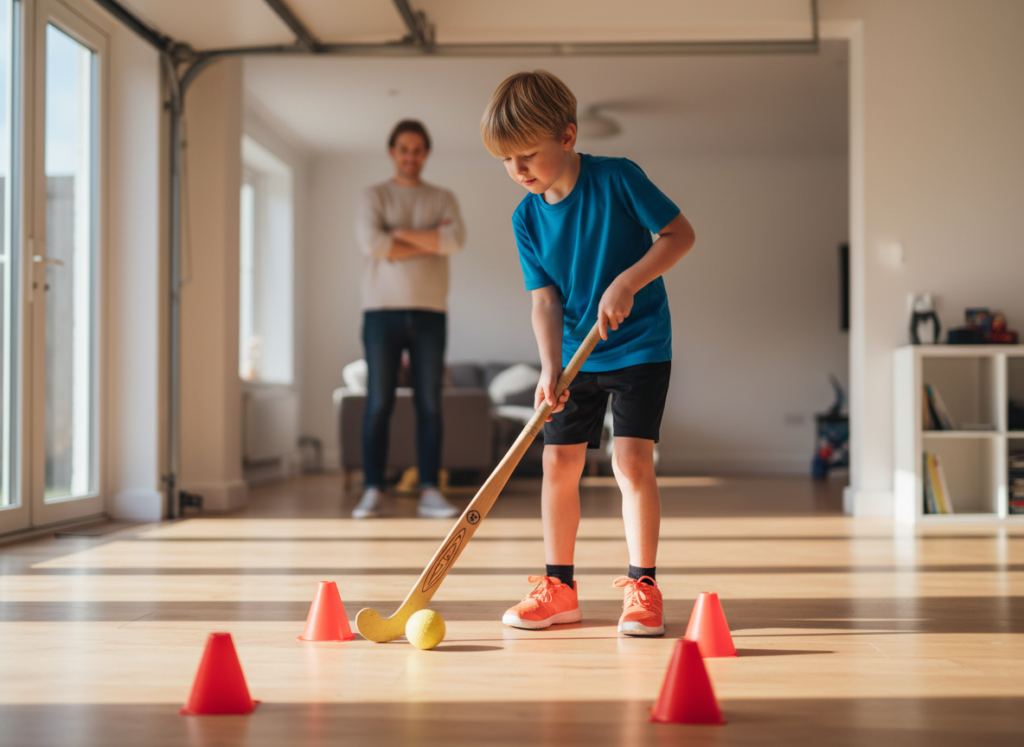
- “Can you be the equipment helper and place the markers?”
- “Can you choose the start line?”
- “Can you be the timer boss?”
5) The one-skill version (strip it right back)
New activities often fail because they ask for too many skills at once.
Start with one skill:
- Throw or catch (not both)
- Step over or jump (not a whole obstacle course)
- Copy one move (not a full routine)
Then add layers later.
6) The 3-minute rule (short rounds win)
Commit to a tiny time window.
- “We’ll try for 3 minutes. If you hate it, we stop.”
Most kids will continue once they’ve started. And if they don’t, you’ve protected trust — which matters more than “getting it done.”
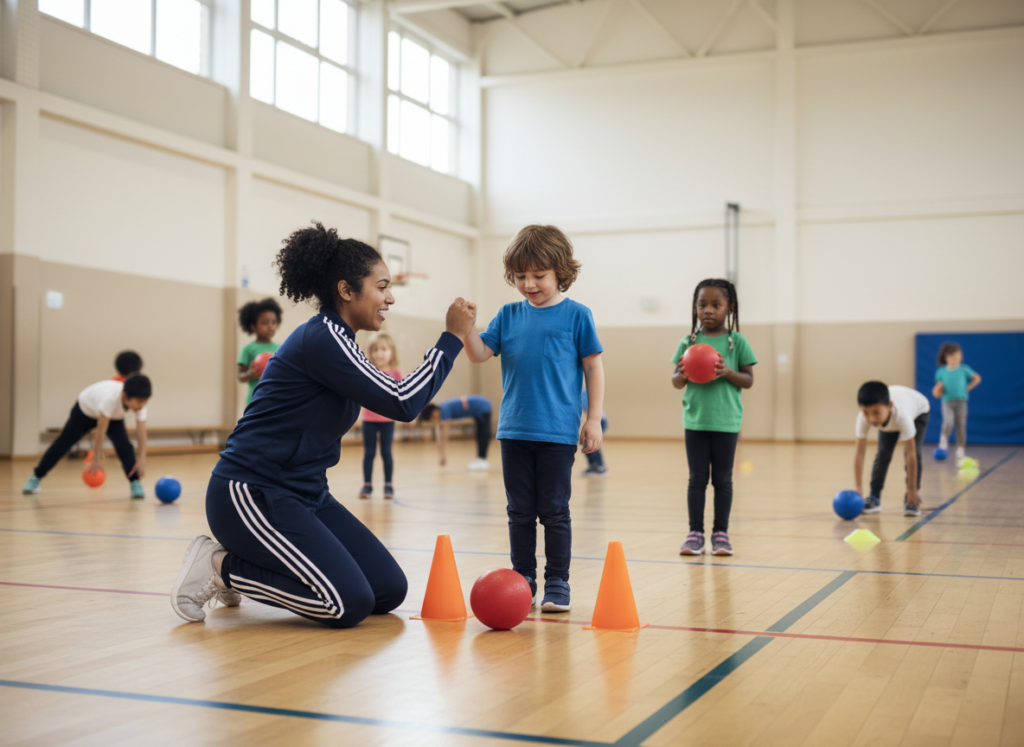
7) The effort spotlight (what to praise)
Praise what they did, not what they are.
- “You tried even though it was new.”
- “You kept going after the first wobble.”
- “You asked for help — that was smart.”
- “You did a second go — that’s how you learn.”
Avoid:
- “You’re amazing!” (can add pressure)
- “See, that was easy.” (dismisses the effort)
8) The reset plan (when it goes wrong)
If it melts down, don’t push harder. Reset the body, then re-enter.
A 60–90 second reset:
- Water sip
- Heavy work: wall push-ups, carry cushions, push a laundry basket
- One calm breath together
Then offer a smaller re-entry:
- “Do one go with me.”
- “Or be the helper for the next round.”

SEND-friendly tweaks (quick wins)
- Visual first: demonstrate once before talking.
- Reduce sensory load: quieter corner, fewer people watching, softer lighting.
- Predictable structure: first → then → finish.
- Choice of tools: different ball sizes/textures, ear defenders, gloves.
- Permission to opt in slowly: watch → join → lead.
For activity providers: a simple “new activity” delivery script
- “Today we’re trying something new. We’ll do a practice go first.”
- “You can choose: watch first or go first.”
- “We’re aiming for brave tries, not perfect.”
- “We’ll play for 3 minutes, then we’ll review and tweak.”
Conclusion
New activities don’t fail because kids are difficult. They fail because the first step feels too big.
Keep it small, give a little control, strip it back to one skill, and treat the first attempt like a practice go. When children learn that new doesn’t mean unsafe, they start saying yes more often — and that’s where confidence grows.