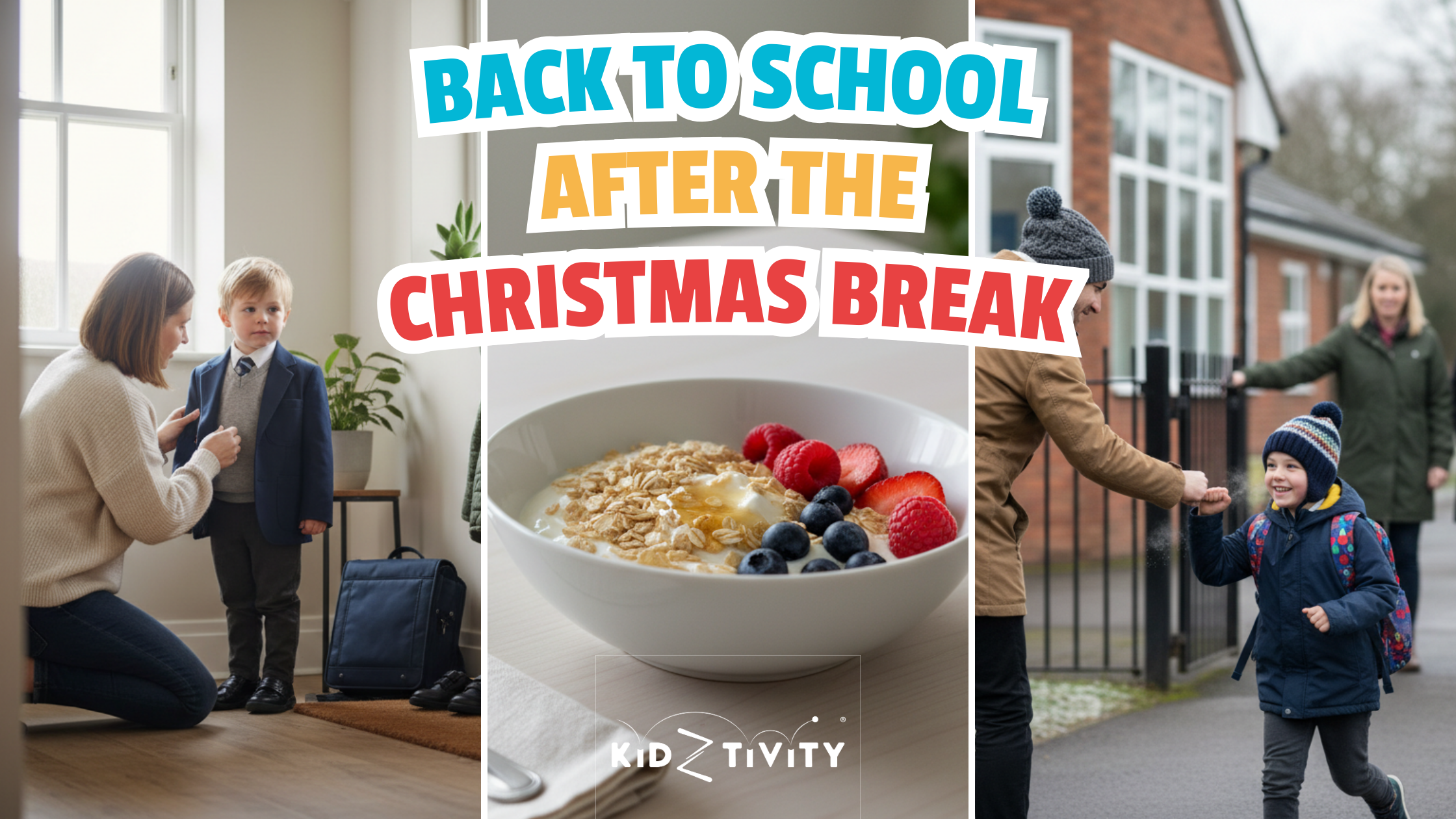
That first school morning after Christmas can be a shock to the system. Kids have been living in a looser routine (later nights, slower mornings, more treats, more screen time), and suddenly it’s uniforms, time pressure, and a packed day ahead.
If you want fewer tears and less rushing, the aim isn’t to “push through” the first day back. It’s to give children calm, consistent signals so that they can recognise what’s happening next, what’s expected, and what support they can rely on.
1) Bring sleep back into line (little by little)
Rather than trying to fix bedtime in one night, shift things gradually.
- Move bedtime and wake-up earlier by 10–15 minutes each day
- Keep evenings predictable: dim lights after tea, quieter play, calmer voices
- Put screens away before bed so children can switch off
- Stick to the same wind-down sequence (bath, story, quiet chat)
- Set out pyjamas and tomorrow’s clothes to reduce morning stress
A cool, dark, clutter-free bedroom can also help children settle more easily.

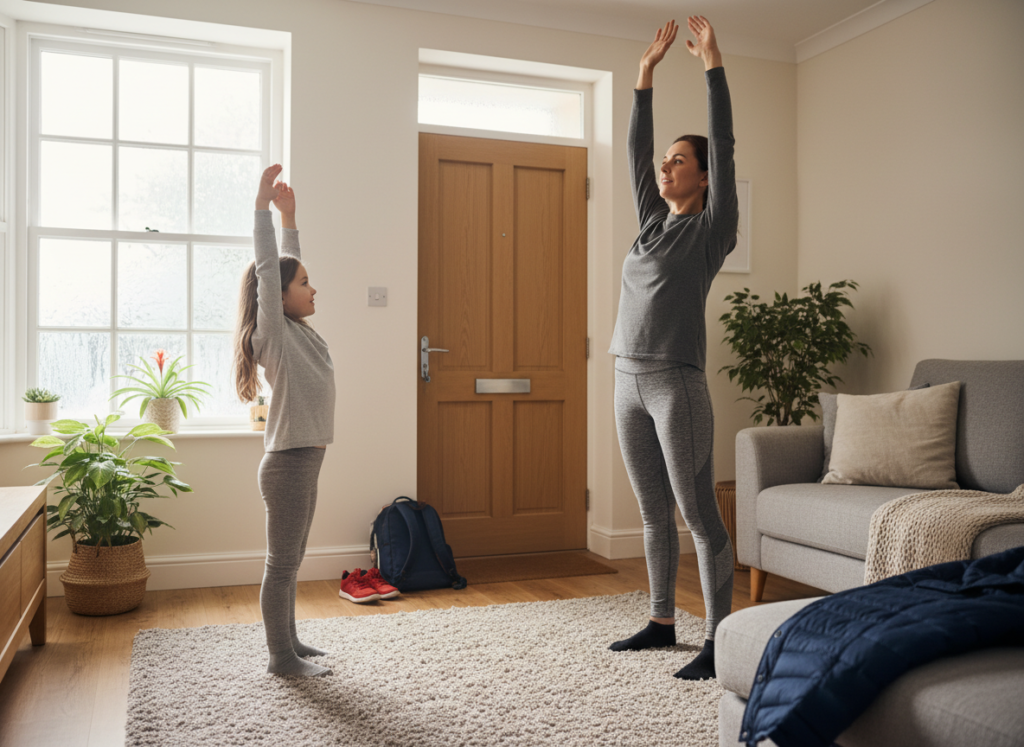
2) Add a burst of movement before school
A short burst of morning movement can help children regulate their bodies and focus their brains.
Simple options:
- A brisk walk around the block
- Scooting part of the journey
- A quick indoor “energy reset” (star jumps, animal walks, mini obstacle course)
Make it effortless: keep trainers and coats by the door so you’re not hunting for kit when the clock is ticking. If you’re travelling by car or bus, park a street away or get off one stop early to build movement into the last part of the journey.
3) Go for a steady-energy breakfast
Breakfast can make a big difference to mood and concentration, especially on that first day back.
Try pairing:
- Wholegrains + protein
- Water or milk
Easy, realistic ideas:
- Porridge with fruit
- Wholegrain toast with eggs
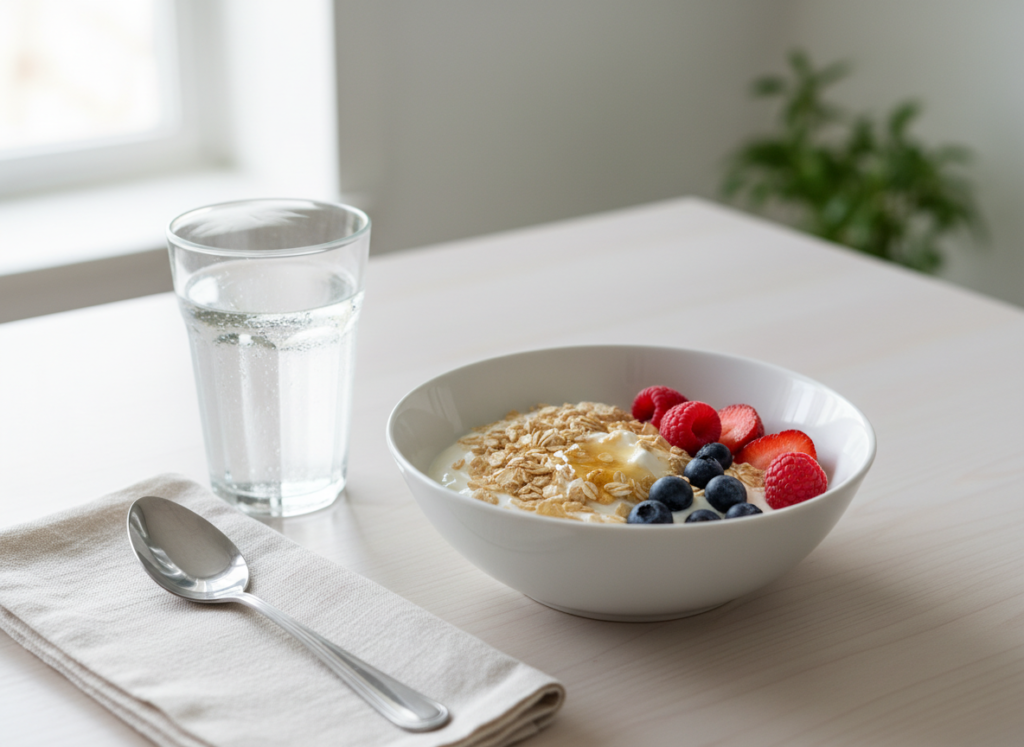
- Greek yoghurt with oats and berries
To speed up the morning, set out bowls, spoons, and breakfast basics the night before. If you can, keep sugary cereals, pastries, and fizzy drinks for another time – big spikes and crashes don’t help children feel steady at the start of their day.
4) Use small, time-limited rewards (without turning it into a battle)
If mornings often stall, tie clear tasks to small rewards that keep things moving.
Keep tasks simple and specific:
- Wash face
- Get dressed
- Shoes on
- Bag by the door
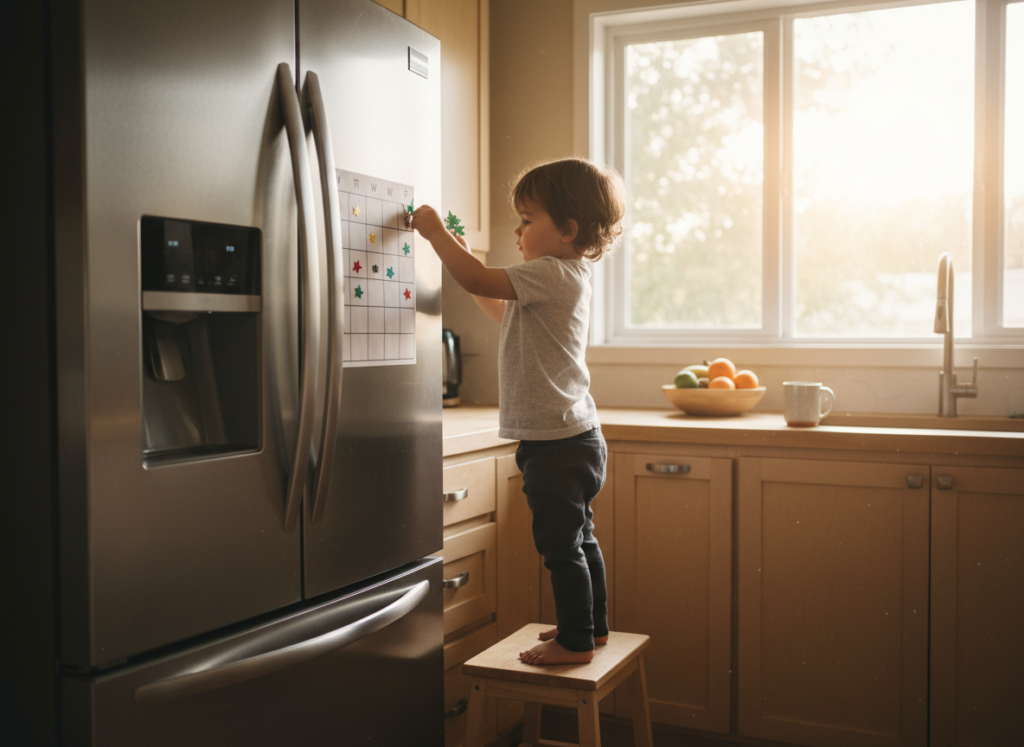
A small sticker chart on the fridge can help children see progress. Once the tasks are done, the “reward” can be a quick choice that doesn’t derail the routine, like:
- Picking the walk-to-school playlist
- Choosing the after-school snack
It also helps to keep screens parked until after school so they don’t become a negotiation point.
5) Keep the school-gate goodbye short, warm, and consistent
A predictable goodbye routine helps children separate with confidence.
- Use the same short phrase each day
- Acknowledge feelings without trying to talk them out of it
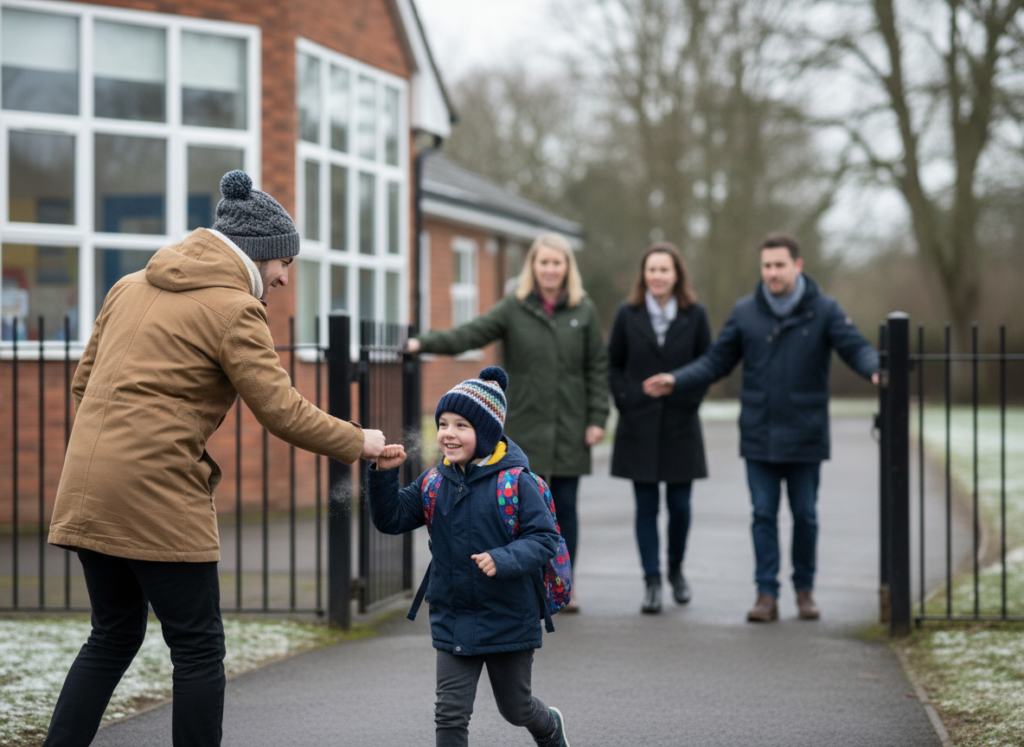
- Add a simple physical cue (hug, handshake, fist-bump)
- Hand over to staff and leave without hovering
Try to avoid phrases that dismiss nerves or add pressure. Instead, focus on reassurance and a clear plan for when you’ll see them again.
Back-to-school after Christmas doesn’t have to feel like a battle. A smoother first week comes from resetting routines gently: nudge sleep back towards school timings, build in a quick burst of morning movement, and aim for a steady-energy breakfast. Keep mornings simple with clear expectations (and small, time-limited incentives if you need them), then finish with a short, warm, consistent school-gate goodbye. Small, predictable steps help children feel secure — and that’s what makes the whole term start calmer for everyone.