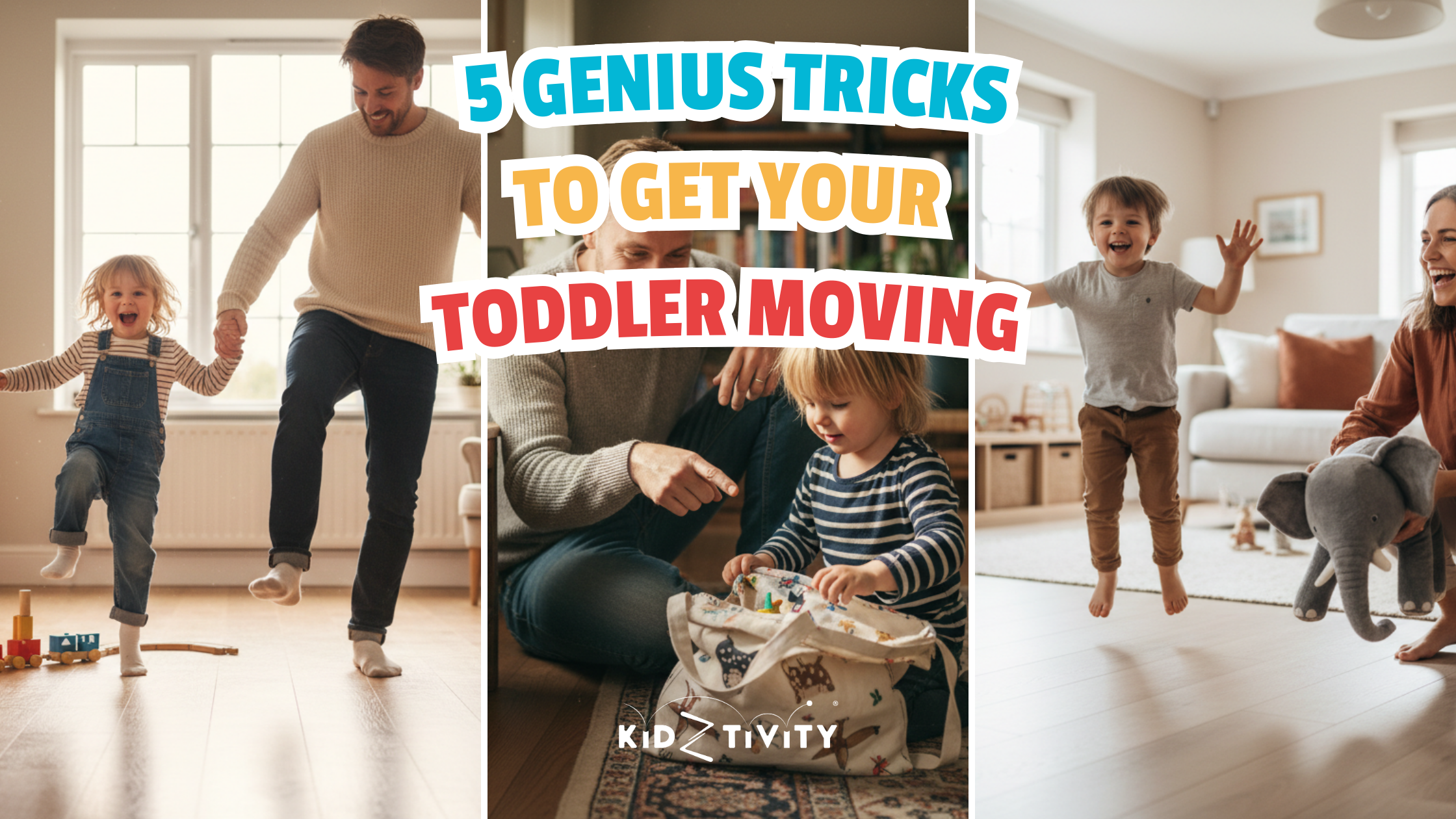
If you’ve got a toddler at home, you’ll know the switch can happen fast: one minute they’re full of beans, the next its screens, sulks, and that pre-tea wobble.
The good news? You don’t need a big garden, loads of kit, or a perfect plan.
You just need a few quick, playful games that make movement the easy option again.
Why movement matters
A UK study found only 23% of preschoolers aged 2-4 met daily physical activity guidelines and just 2.4% achieved 60 minutes of moderate-to-vigorous activity (University of Bristol).
That doesn’t mean parents aren’t trying. It means modern life makes sitting still the default.
So here are five do-it-now games that work in real homes, with real kids, on real days.
1) The 3-Minute Animal Parade
Best for: instant giggles + quick energy shift
Time: 3 minutes
Space: a small patch of floor
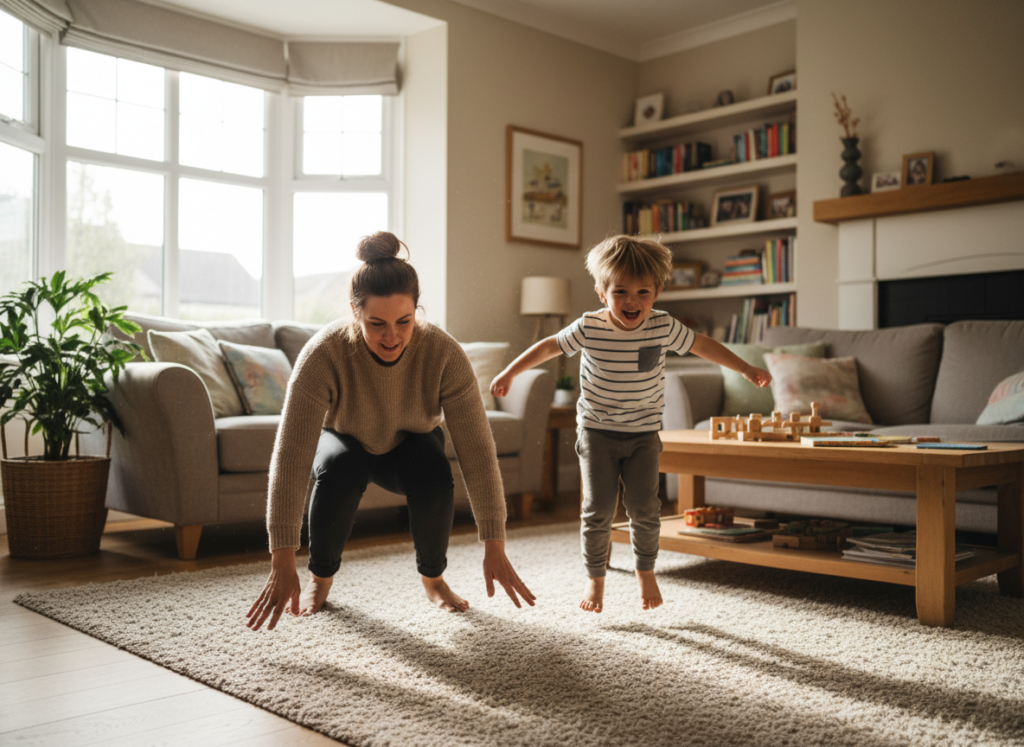
Pick five animals and call them out one-by-one. Your child copies the movement.
Try:
- Stomp like an elephant
- Waddle like a penguin
- Crawl like a cat
- Hop like a frog
- Flap like a bird
Make it work:
- Push toys back and take socks off for better grip
- Switch animals quickly to hold attention
- Set a phone timer for 3 minutes so it ends cleanly (before it turns into chaos)
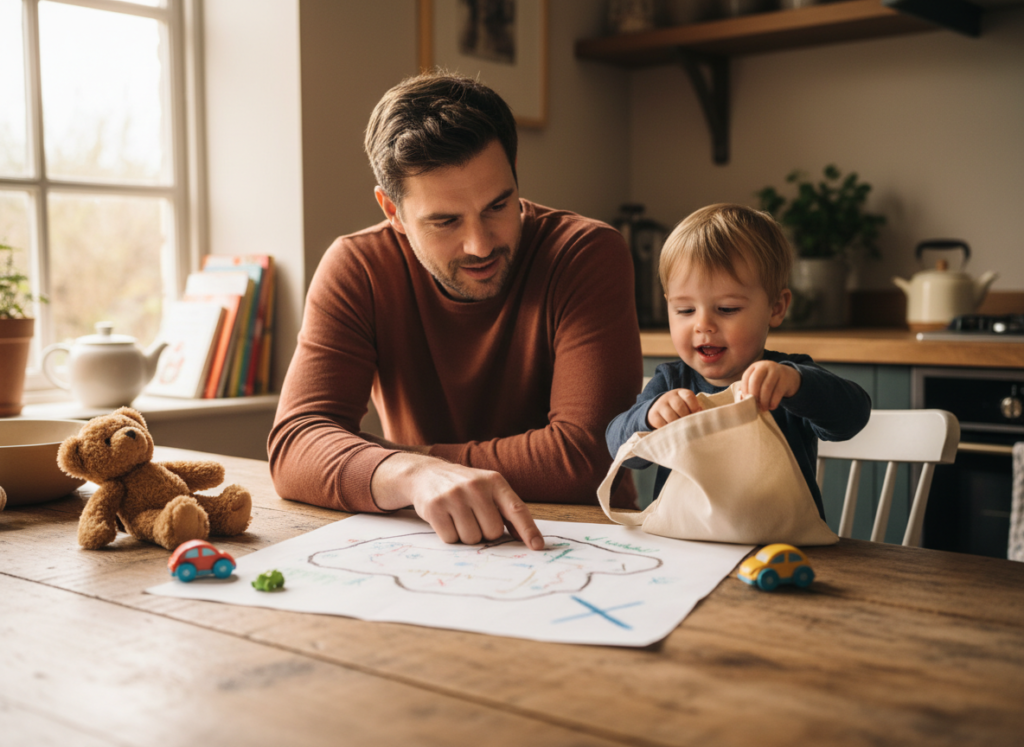
2) The Two-Room Treasure Hunt
Best for: focused movement (without them realising)
Time: 5-10 minutes
Space: two safe rooms
Hide three small toys at child height in safe spots:
- Behind a cushion
- Under a tea towel
- On a low shelf
Then draw a super-simple map with arrows between a few landmarks (sofa, table, shelf). Give them a small bag to collect the treasure.
Make it work:
- Add coloured stickers to match each clue to each toy (keeps it fast and clear)
- Keep it to two rooms so you stay in control
- Celebrate the final find like they’ve just won a medal
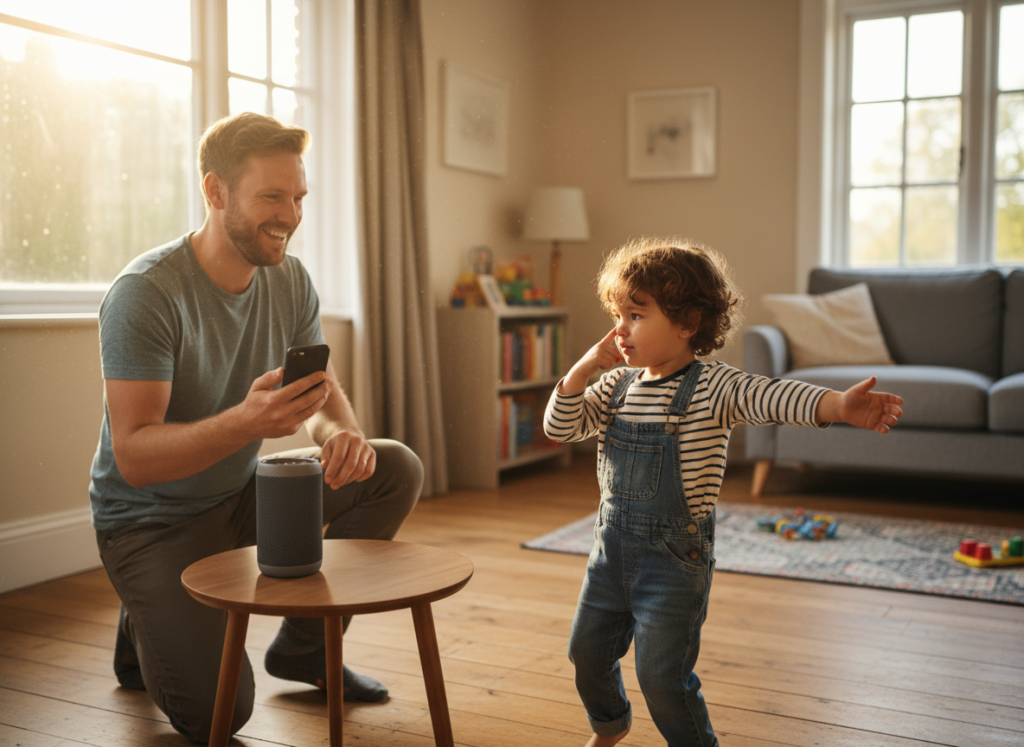
3) One-Song Freeze Dance
Best for: quick reset when moods wobble
Time: one song
Space: clear floor
Play one favourite track and pause the music at random. When it stops, everyone freezes.
Between pauses, call out simple actions:
- Jumps
- Tiptoes
- Spins
- Knee lifts
On each freeze, add a control cue:
- Hand on head
- Finger on nose
- Hands on knees
Safety first: do a quick scan for loose rugs or slippery socks.
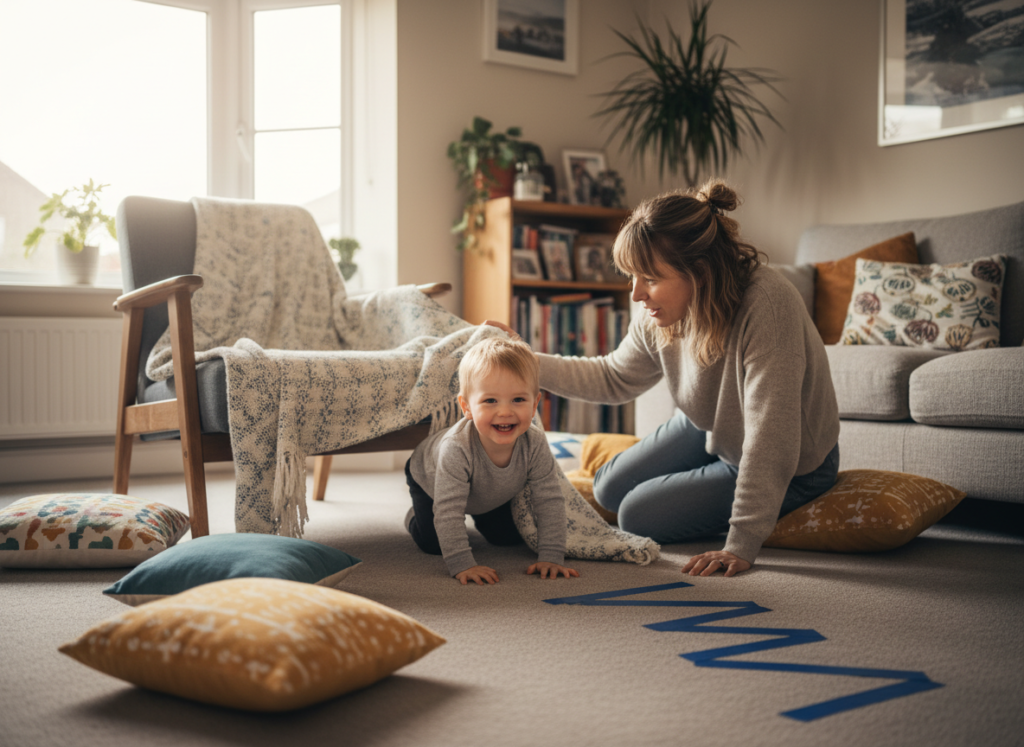
4) Cushion Obstacle Course (Fast Loop Version)
Best for: big movement in small spaces
Time: 5 minutes
Space: living room
Build a mini loop so the start and finish sit close together (easy repeats).
Use:
- Sofa cushions as stepping stones
- A sturdy chair as a tunnel
- Masking tape on the floor as a balance line
Show one lap, then let them do 2-3 laps at their own pace.
Make it work:
- Swap one piece each round to keep it fresh
- Keep it mini, under-5s love repeating short courses
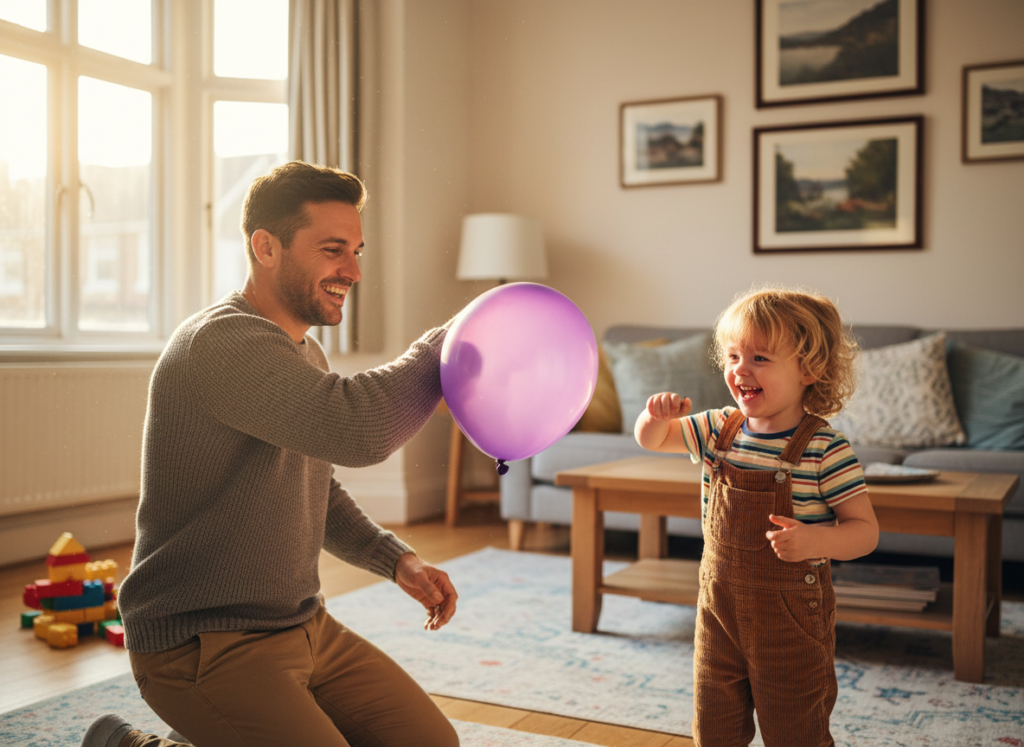
5) Balloon Bounce (No Hands Allowed)
Best for: coordination + calm focus
Time: 3-5 minutes
Space: small cleared area
Keep one balloon in the air, but no hands.
Try:
- Elbows only
- Knees only
- Head taps (gentle!)
Count hits together and reset if it drops.
Make it work:
- Smaller spaces slow the balloon down (easier for little ones)
- Move fragile items out of reach first
- Add a simple focus rule: call a colour each hit
A simple way to use these (especially before tea)
If you’re not sure where to start, pick one:
- Need a quick mood lift? Animal Parade
- Need a reset? Freeze Dance
- Need them to focus? Treasure Hunt
The aim isn’t to wear them out. It’s to use playful movement to shift the whole vibe, helping under-5s regulate, laugh, and settle.